
Few cuisines are better engineered for group dining than Indian food. The tradition of eating from shared vessels, of ordering many dishes and building a meal collectively, is embedded in the food culture of the subcontinent itself. Yet Melbourne groups frequently underutilise what a quality Indian restaurant can offer, arriving without a plan and leaving without having experienced the format at its best.
A 2024 OpenTable Australia survey found that 41% of group diners in Melbourne cited “unfamiliarity with the menu” as the primary reason for ordering conservatively at restaurants outside their usual cuisine. At Indian restaurants, that conservatism tends to produce a table of individual mains, no starters, and a missed opportunity.
Flora Melbourne works with groups regularly, from birthday dinners of eight to corporate tables of twenty. The gap between a good group experience and a great one is almost always planning, and almost always addressable before the night begins.
This article covers what to order for a group at a contemporary Indian restaurant in Melbourne, how banquet menus work, and what to ask before you book.
Before You Book a Group Table, Get the Order Right
Group dining at any restaurant works better when three things are confirmed in sequence:
- Foundability. Confirm the restaurant has genuine experience with groups. Look for dedicated group menus, banquet options, or a specific group enquiry process on the website. A venue that has thought about group dining operationally will show it.
- Believability. Check that the group menu reflects the same quality as the a la carte offering. A banquet menu that removes the dishes a kitchen is proudest of is a warning sign.
- Reach. Only once the first two are confirmed does it make sense to compare pricing, minimum spends, and private dining availability.
A common mistake: groups that book based on price alone, selecting the lowest banquet tier without checking what it includes, frequently find themselves with dishes that do not represent the restaurant at its best. The cheapest package is not always the best-value package.
Why Indian Cuisine Suits Group Dining Better Than Most
\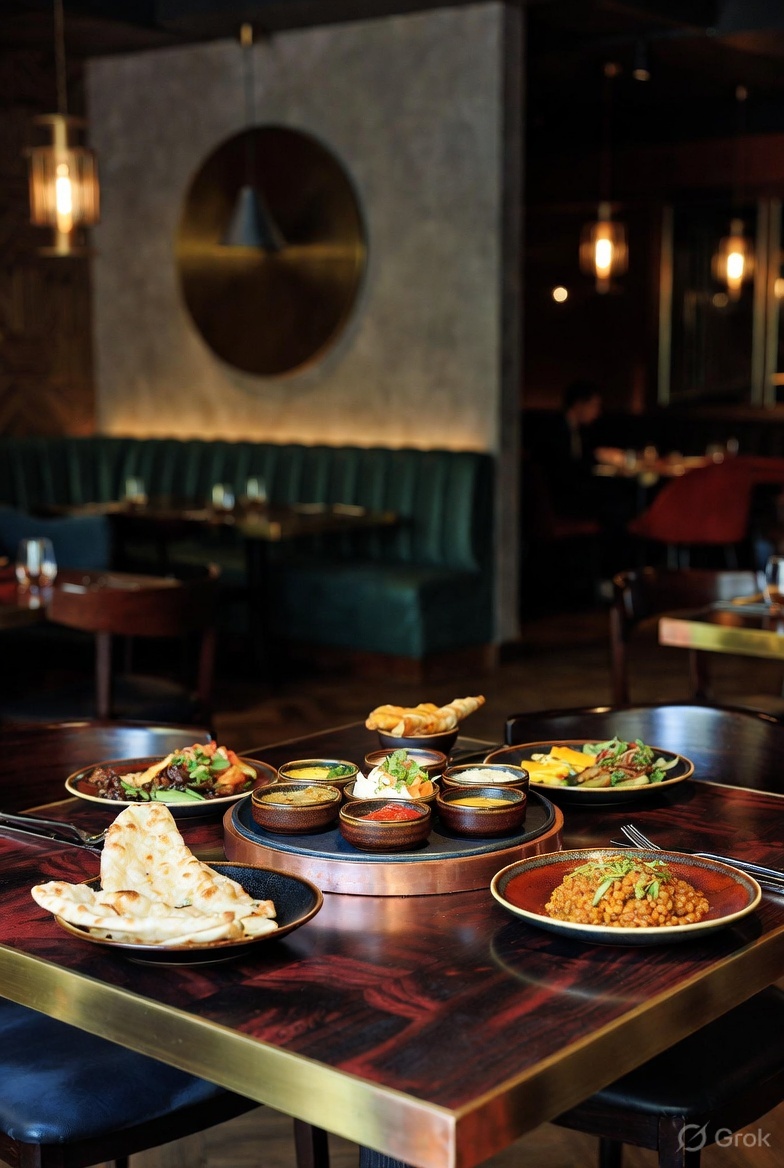
The structure of a traditional Indian meal is inherently communal. Dishes are designed to be placed at the centre of the table and shared, with each person building their own plate across multiple flavours and textures in the same sitting. A single meal might move from bright, acidic chutneys through rich braised proteins to cooling raita, all at once, rather than sequentially.
At Flora Melbourne, a group of twelve visiting for a birthday dinner in late 2024 arrived having booked the shared banquet menu. The host reported afterwards that guests who described themselves as “not really Indian food people” before the evening became the most enthusiastic at the table once the sharing began. The format removes individual commitment to a single dish and replaces it with collective exploration. That shift in dynamic changes how people experience unfamiliar food.
Specific actions to take when planning:
- Book at least two weeks in advance for groups of six or more
- Ask the restaurant to confirm which dishes on the banquet menu are chef’s current recommendations
- Advise dietary requirements at the time of booking, not on arrival
- Request a sample menu before committing so the group knows what to expect
- Confirm whether the banquet includes bread service, since naan and roti are essential vehicles for sharing dishes
One thing NOT to do: do not ask for all dishes to be served simultaneously. A well-paced group meal at an Indian restaurant works in waves, not as a single delivery. Ask the kitchen to bring dishes progressively.
The Sharing Plates Worth Ordering
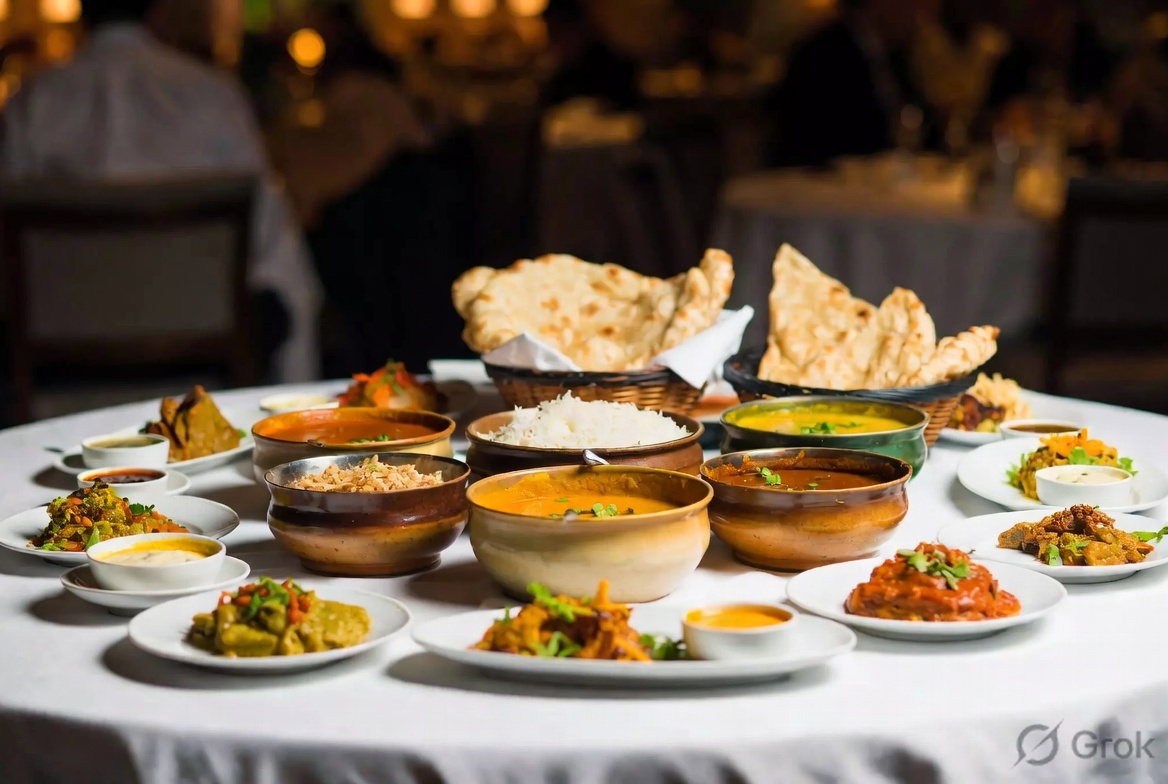
When ordering a la carte for a group rather than choosing a banquet, certain dishes travel better across a table than others. At Flora Melbourne, the dishes that generate the most conversation and return visits from group tables tend to share three qualities: they have a defined regional identity, they are designed to be scooped and shared rather than plated individually, and they balance richly spiced centrepieces with lighter, fresher accompaniments.
Practical guidance for building a group order:
- Allow roughly two to three shared dishes per person for a satisfying meal, plus bread and rice
- Include at least one vegetarian centrepiece, regardless of the group’s makeup, since vegetable-forward Indian dishes frequently become the most discussed on the table
- Order a cooling element such as raita or a fresh salad alongside anything heavily spiced
- For groups of ten or more, a banquet menu typically provides better value and less decision fatigue than ordering a la carte
Group Size and Format Comparison
| Group Size | Recommended Format | Typical Price Range Per Person | Key Consideration |
|---|---|---|---|
| 4 to 6 | A la carte sharing order | $55 to $75 | Maximum flexibility; ask staff for guidance |
| 7 to 12 | Set banquet menu | $75 to $110 | Confirm banquet includes bread and sides |
| 13 to 20 | Private or semi-private banquet | $95 to $130 | Ask about minimum spend and room hire |
| 20 plus | Exclusive venue hire or custom menu | On enquiry | Plan eight to twelve weeks in advance |
| Mixed dietary needs | Any format with pre-advised requirements | Varies | Indian cuisine accommodates dietary variation well |
What We Have Learned Working With Melbourne Groups
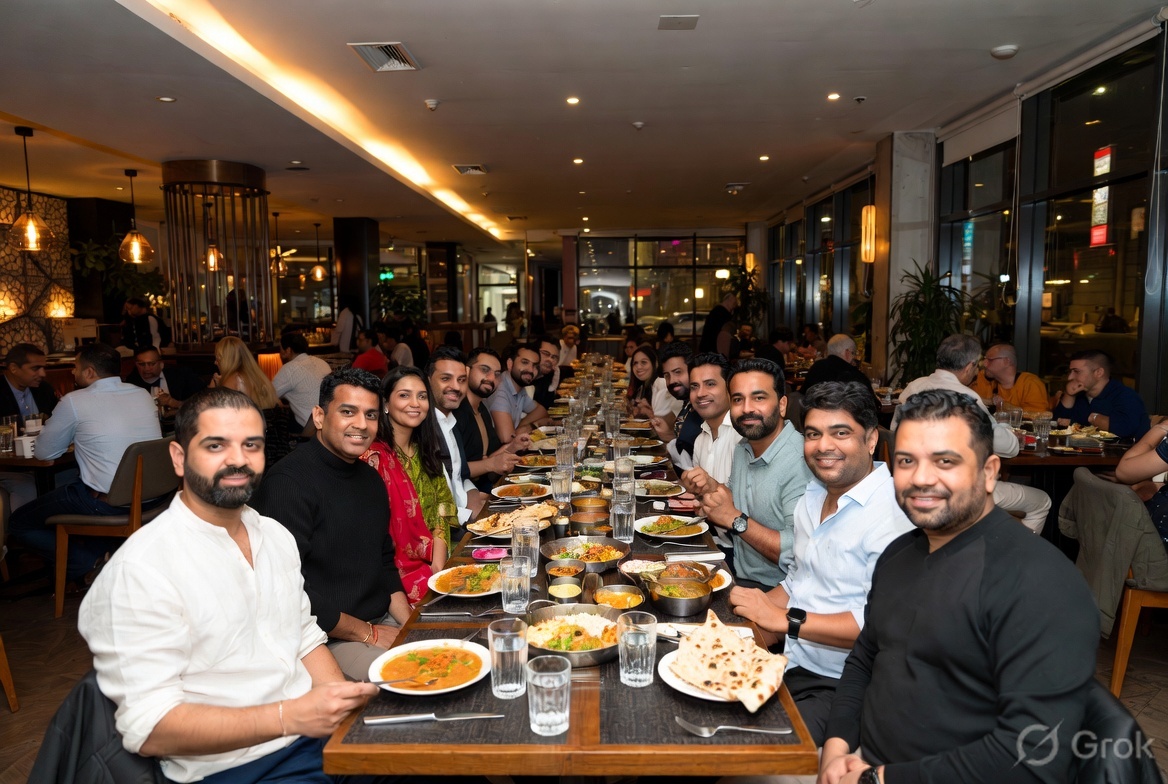
Groups that brief the restaurant in advance consistently have better evenings than those that arrive and decide on the night. The principle is simple: a kitchen that knows it is feeding a table of sixteen with three vegetarians, one nut allergy, and a guest who prefers milder spice can produce something considered. A kitchen that discovers this at 7:30pm produces something reactive.
If you are organising a group booking at a contemporary Indian restaurant in Melbourne, treat the restaurant as a collaborator, not just a service provider.
Book a group dining experience at Flora Melbourne today.
Frequently Asked Questions
What is the best way to order Indian food for a large group in Melbourne?
A banquet or set menu is the most practical approach for groups of seven or more. It removes individual decision-making, ensures the kitchen can pace the meal properly, and typically offers better value than an equivalent a la carte order. Always advise dietary requirements at the time of booking so the kitchen can prepare accordingly.
Does Flora Melbourne offer private dining for groups?
Flora Melbourne accommodates group bookings across a range of sizes. Contact the restaurant directly to discuss private or semi-private dining options, minimum spends, and current banquet menu availability. Enquiries made at least two weeks in advance receive the most flexibility in terms of menu customisation.
How much does a group Indian banquet cost per person in Melbourne in 2026?
At quality contemporary Indian restaurants in Melbourne, banquet menus for groups typically range from $75 to $130 per person depending on the format, group size, and whether beverages are included. Some venues offer tiered options. A la carte sharing orders for smaller groups of four to six generally fall between $55 and $75 per person.
Can Indian restaurants in Melbourne accommodate dietary requirements for group bookings?
Yes, and Indian cuisine is particularly well-suited to mixed dietary groups. The breadth of vegetarian, vegan, gluten-aware, and dairy-free options within Indian cooking means most requirements can be accommodated with advance notice. Always communicate specific allergies at the time of booking rather than on arrival.
What is the difference between a banquet menu and a sharing plate order for a group?
A banquet menu is a predetermined selection chosen by the restaurant for the group, usually at a set price per person, with dishes served progressively. A sharing plate order is built a la carte by the group from the full menu. Banquets suit larger or less food-familiar groups; sharing plate orders suit groups who want to make specific choices.
We have guests who are new to Indian food. Is group Indian dining still a good idea?
Indian food served in a shared format is often a better introduction to the cuisine than an individual plate, because guests can try small amounts of many dishes without committing to any single one. A well-paced group banquet with knowledgeable staff guidance tends to convert hesitant guests into enthusiastic ones by the time dessert arrives.
About the Author: The Flora Melbourne editorial team is based in Melbourne, Victoria, and covers contemporary Indian dining, food culture, and practical guidance for getting the most from Melbourne’s restaurant scene. Flora Melbourne is a modern Indian restaurant drawing from the coastal and spice-trade traditions of Kerala. For group bookings and banquet enquiries, visit flora.melbourne.